
How Arrest Warrants Work in Randolph County
Indiana Code 35-33-2-1 lays out two ways a warrant gets issued. An indictment comes back from a grand jury and leads straight to a court-issued arrest warrant. An information takes a different route. A judge must first find probable cause before signing off. Either way, the warrant is a command to arrest the person and bring them before the court without unnecessary delay. Randolph County criminal matters are split between Randolph Circuit Court and Randolph Superior Court under local rules, while Union City City Court handles what was filed there. Police supply the paperwork, but the judicial determination belongs to a judge alone. That is why a public name match means little until you tie it to the right court, cause number, and person.
Indictment and Information Pathways
Why don't probable-cause papers look the same in every Randolph County case? The answer sits in the charging path. An indictment comes from the grand jury, while an information asks the judge to review the submitted basis and decide whether probable cause supports issuing the warrant. The written warrant itself is a separate paper from the charging instrument and from any probable-cause affidavit, and that difference matters the moment you request records. Name what you want: charging instrument, supporting affidavit, written warrant, or a chronological case entry. Each can carry a different access status and custodian. The Indiana General Assembly Title 35 page holds the statewide legal framework; current Randolph County case status still comes from the local issuing court and docket. One more trap deserves mention. An arrest-warrant affidavit and a search-warrant affidavit are different animals. Indiana Code 35-33-5-2 covers affidavits describing a person, place, or thing plus the facts offered as probable cause for a search, and that paper never becomes an arrest warrant just because it sits in the same criminal case. Records that are purely investigative and unrelated to a pending criminal proceeding may be withheld from public access. When you ask the Clerk, give the document title, filing date, and cause number. A precise request beats assuming the docket is broken because one affidavit is not there.
Arrest Warrants: What They Contain
Indiana Code 35-33-2-2 requires the warrant to be in writing. It must identify the person, the alleged offense, the issuing place and date, the judicial authority, the command, and any bail terms. Randolph County publishes no local warrant-number format, so use the cause number with the Clerk.
| Warrant Number | No verified local public format; use the cause number such as synthetic 68C01-YYMM-F6-######. |
|---|---|
| Named Subject | Name or identifying description stated in the written order. |
| Charge or Offense | The alleged offense, not a finding of guilt. |
| Issuing Judge or Court | Judicial authority controlling the warrant and later recall. |
| Bond or Bail | Information when applicable, subject to the actual order and local rules. |
| Date and County | When and where the order was issued, plus the required signature. |
The Affidavit Is Another Record
A probable-cause affidavit supports the judge's determination, but it is not the warrant. Indiana Code 35-33-5-2 governs when affidavits and related records may be withheld. Investigative sensitivity, a seal, confidential identifiers, juvenile status, or another access rule can keep a document off the public view. So a Randolph County case with no affidavit online may still be complete, and a blank search is not clearance. Ask the Clerk directly whether a specific document is open to inspection. Press for investigative explanations or protected identifiers and you will be refused. Indiana APRA, IC 5-14-3, cannot override court access rules, force a record into existence, or unlock confidential material.
How Warrants Get Served in Randolph County
Indiana Code 35-33-2-3 directs every warrant to the sheriff. The Randolph County Sheriff can execute it personally or hand it to another officer or agency, so municipal police may come knocking even though a county court issued the order. The county publishes no separate warrant unit and no dedicated warrant phone line. Service can happen at home, during a traffic stop, or in any lawful encounter. After the arrest, the person is typically booked, brought before the court, and handled under the actual bond order and applicable rules. A no-contact order, a domestic-violence hold, or a judge-set bond can change that sequence. Follow only official, case-specific instructions when planning a surrender in Randolph County.
Sheriff and Police Roles Differ
The Randolph County Sheriff and jail sit at 155 East South Street, Winchester. Published numbers are (765) 584-1721 and (765) 584-7331. The county 911 contact map also lists Winchester, Union City, Parker City, Farmland, and Lynn police.
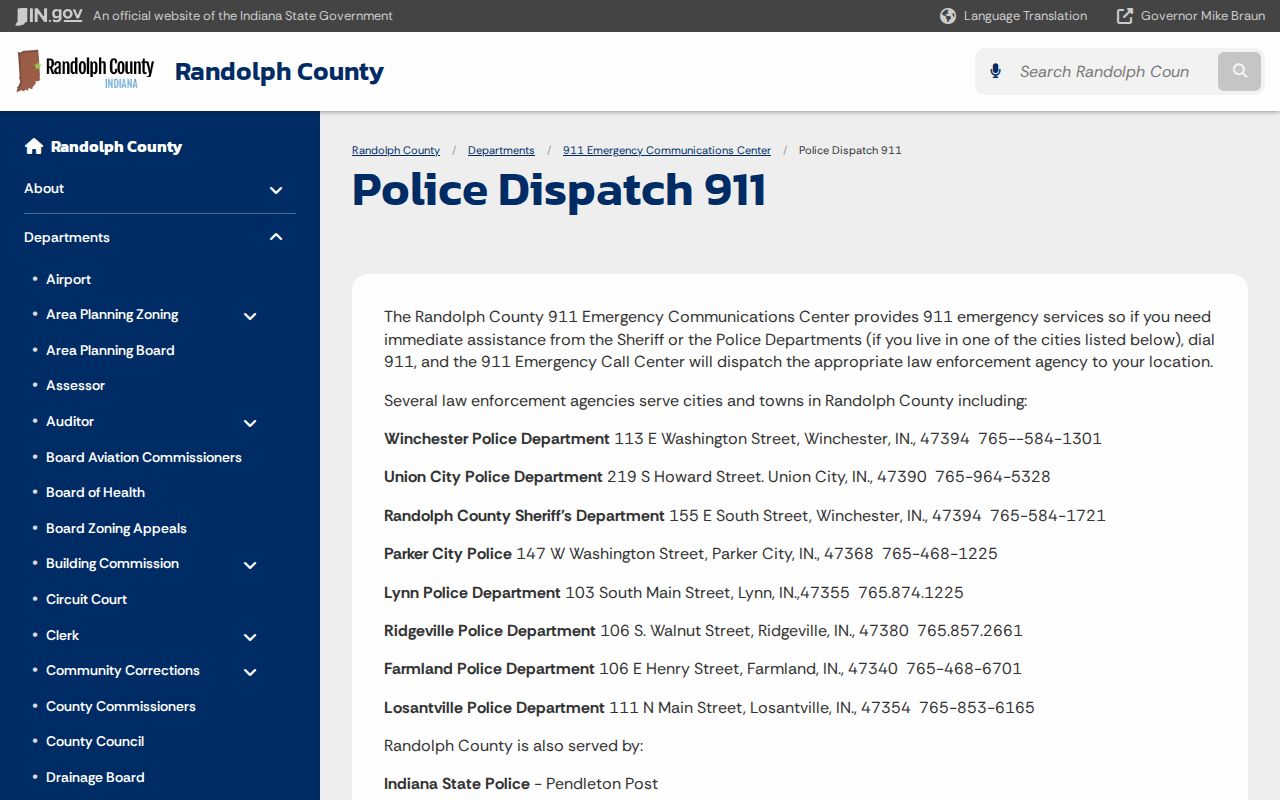
That directory helps you find an operational contact. It does not make every listed department a records custodian, so route warrant questions to the issuing court. Reserve 911 for emergencies, not routine warrant-status calls in Randolph County.
Arrest Warrants, Summonses, and Bench Warrants
Each paper demands a different response. An arrest warrant commands custody. A summons orders an appearance with no arrest attached. A bench warrant usually follows a failure to appear or comply in an existing Randolph County case. Read the instrument and issuing order, not the casual label, to know your next step.
| Feature | Arrest Warrant | Summons | Bench Warrant |
|---|---|---|---|
| Order | Arrest and bring before court | Appear on the stated date | Arrest for missed obligation |
| Basis | Indictment or probable-cause process | Proceed without initial custody | FTA, contempt, or noncompliance |
| Issuer | Court or judge | Court under applicable procedure | Judge in existing case |
| Response | Surrender and bond planning | Appear as directed | Ask about appearance or recall |
See the bench warrant lookup for Randolph’s court-specific FTA route.
Recent Arrests Do Not Prove Status
Randolph County now keeps its recent-arrests information on the “RANDOLPH COUNTY INDIANA SHERIFF APP.” That is where the sheriff points readers. Entries can carry a name, date, charges, and agency. Some list failure to appear or an out-of-county warrant. Those are custody records, though, not a full list of Randolph County active warrants, and the page states no update schedule. The official Winchester Police page is a separate agency source, and it posts no city warrant portal.

No city roster changes that. A Randolph County warrant check still runs through MyCase and the issuing court, not an unofficial names list.
Handling an Arrest Warrant in Your Name
Start with the cause number, the issuing court, and the current order. Randolph County cases carry court codes. Circuit uses 68C01, Superior 68D01, and Union City City Court 68H02. Search MyCase first. Then call the Clerk or the court. The Clerk’s office sits in Room 201 at 100 South Main Street. Weekday hours run 8:00 a.m. to 4:00 p.m. Call (765) 584-4214 or (765) 584-4903. Bring a lawyer into the decision. The choices are voluntary surrender, posting the bond set for that case, or a motion asking the court to recall or quash the warrant. Randolph County publishes no dedicated recall form and sets no universal warrant fee. Paying court costs does not necessarily recall an order, and the Sheriff cannot grant judicial relief.
Important: Ask an attorney to coordinate voluntary surrender, bond, and any motion to recall or quash before approaching court or law enforcement.
Arrest Is Not a Conviction
A possible match deserves a close look before anyone acts on it. Compare the cause number, the court, the case type, the filing date, and other lawful identifiers. A common name can pull up many MyCase records. So narrow the search. If a record is restricted, ask the office only what it can disclose. Randolph County clerks field those questions every day. When an official record looks stale, ask the maintaining agency for a correction rather than publishing a competing roster. The same care applies to a relative’s matter. It applies to any Randolph County entry found through a casual name search too. Date each item you find.
Winchester Court Records Moved
Winchester City Court closed on December 31, 2023. That date matters for old paperwork. A summons or arrest document may still name a city office with no control over the case. The city sends older traffic matters to the Randolph County courthouse. Tickets issued after May 2022 go to the court named on the ticket. Do not assume every record moved the same way. Read the current case code. Then confirm with the Clerk. The official Winchester City Court page documents the transition.
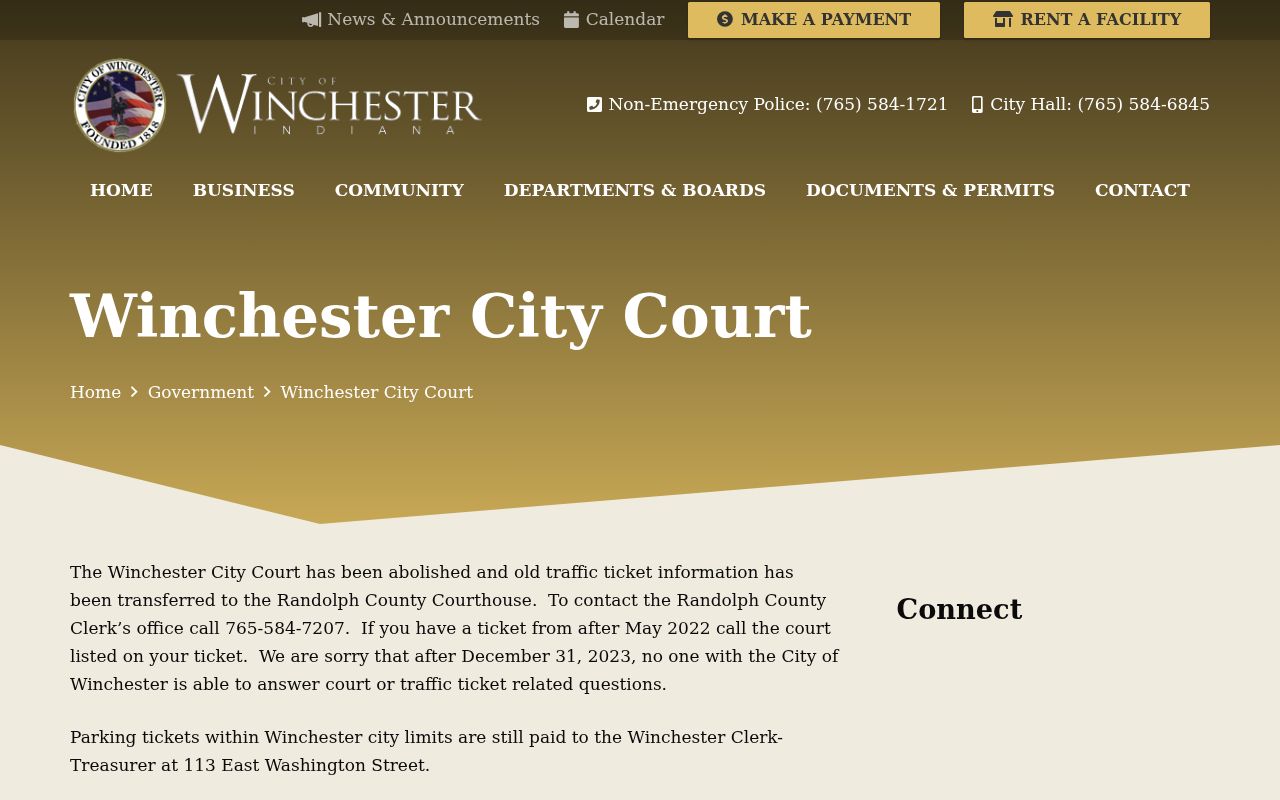
Check old contact details before you appear, pay, or file. Parking tickets stay with the city Clerk-Treasurer and are not automatic arrest-warrant matters in Randolph County.